



Education
Jamaica Hosts Robotics Training Camp As Road To Shanghai 2026 Continues
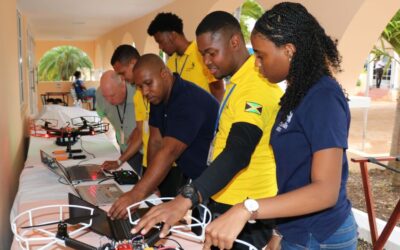
The journey to WorldSkills Shanghai 2026 is gaining momentum in Jamaica, as competitors, experts and technical leaders from across the globe participate in the Studica Robotics Training Camp, currently underway at Cardiff Hotel and Spa in Runaway Bay, St. Ann.
Hosted by WorldSkills Jamaica, HEART/NSTA Trust and Studica Robotics, the week-long camp has brought together participants from Jamaica, Barbados, China, Brazil and Singapore to strengthen their capabilities in Autonomous Mobile Robotics and Unmanned Aerial Systems (UAS), two of the fastest-growing technological fields worldwide.
The first two days of the camp have already provided participants with intensive hands-on training, exposing competitors and experts to international standards, emerging technologies and the realities of competing on the global stage.
Director of Training Infrastructure Development at HEART/NSTA Trust and Technical Delegate for WorldSkills Jamaica, Dwayne Bent, believes the initiative is a critical step in preparing Jamaica and the wider Caribbean for future technological advancement.
He noted that both the UAS and autonomous mobile robotics disciplines rank among the most significant skills featured in WorldSkills International competitions and are increasingly important in modern industries driven by automation and advanced technologies.
“To be able to medal and do our very best, we have to be among the best, learn from the best and see how much we can improve,” Mr. Bent maintained.
The camp offers more than technical instruction. Participants are learning to interpret competition standards, understand test projects and work with advanced robotic and drone systems using programming languages and software platforms that mirror those used in international competition environments.
The camp offers more than technical instruction. Participants are learning to interpret competition standards, understand test projects and work with advanced robotic and drone systems using programming languages and software platforms that mirror those used in international competition environments.
As training continues, competitors are also being prepared for one of the most demanding aspects of elite competition, performing under pressure.
The Director is of the view that technical competence alone does not determine success. “Everyone will have the same technical descriptions, everyone will understand the standards and everyone will have access to the same equipment. What sets competitors apart is how they perform under pressure,” he pointed out.
The camp is expected to transition into a simulated competition environment, allowing participants to experience the intensity, time constraints and scrutiny they are likely to face in Shanghai in September.
For Chief Executive Officer (CEO) and Official Delegate for WorldSkills Jamaica, and Managing Director of HEART/NSTA Trust, Dr. Taneisha Ingleton, hosting the training camp in Jamaica is a significant achievement for the region.
“It is a deliberate effort to ensure that our participants and our Caribbean neighbours experience what is happening with other nations so that we can improve in the areas necessary to compete globally,” she said.
Dr. Ingleton indicated that Jamaica and Barbados remain the only Caribbean countries currently competing at the international WorldSkills level, making regional collaboration especially important.
She also highlighted the growing relevance of robotics and unmanned aerial systems in addressing challenges across the Caribbean, including climate resilience, infrastructure development and economic growth. “These are critical skill sets that are going to be needed to grow our Caribbean,” the CEO emphasised.
The international nature of the camp has also created valuable opportunities for networking and knowledge exchange. General Manager of Studica Robotics in Canada, Derek Murphy, said the training environment is designed to prepare both competitors and experts for the realities of WorldSkills competition.
“What we’ll do first is take them through training and then put them through the competition environment, which prepares them for the pressure of getting things done within a specific time,” Mr. Murphy explained.
He stressed that WorldSkills competitors are often considered among the highest-performing skilled professionals in their fields and that participation itself represents a globally recognised standard of excellence.
Beyond competition, Mr. Murphy believes the skills being developed have direct, real-world applications in sectors such as engineering, agriculture, mapping, search and rescue operations and emerging drone-based industries.
Among those benefiting from the camp are participants from Barbados, who have welcomed the opportunity to test equipment, refine techniques and learn from their international counterparts.
UAS Expert, Jelani Payne, described the experience as both “challenging” and “rewarding”. “It showed us a lot of the issues in terms of preparation and highlighted things we need to improve,” Mr. Payne said.
He added that the training has allowed his team to gain a deeper understanding of equipment and operations, while receiving valuable support from participants from Jamaica and China.
For competitor Samiya Allen of Barbados, the camp has already provided important lessons that will shape future preparation. “It’s been a learning experience. We’ve learned a lot and [we] now know the areas that we need to work on,” she said.
Ms. Allen noted that one of the greatest benefits has been the opportunity to collaborate with participants from other countries. “Working with my Jamaican counterparts has been awesome. I feel I learned a lot from them,” she added.
Education stakeholders have also welcomed the initiative. Assistant Chief Education Officer in the Technical and Vocational Education and Training Unit of Jamaica’s Ministry of Education, Skills, Youth and Information, Shereen Davy-Stubbs, described skills competitions as a vital component of technical and vocational education.
“Skills competitions give students an opportunity to demonstrate competence and identify areas where they need improvement,” Ms. Davy-Stubbs added.
The education official noted that as industries increasingly embrace automation and technology-driven solutions, practical exposure through initiatives such as the training camp becomes even more important.
With several activities still remaining, participants continue to sharpen their technical abilities, strengthen international partnerships and gain valuable experience ahead of WorldSkills Shanghai 2026.
As the Road to Shanghai continues, the Studica Robotics Training Camp is proving to be more than a training exercise. It is a demonstration of the Caribbean’s growing commitment to developing world-class talent in emerging technologies, while positioning the region to compete and collaborate on the global stage. (PR/GIS)