



Local
REGIONAL WORKSHOP ON CASE MANAGEMENT
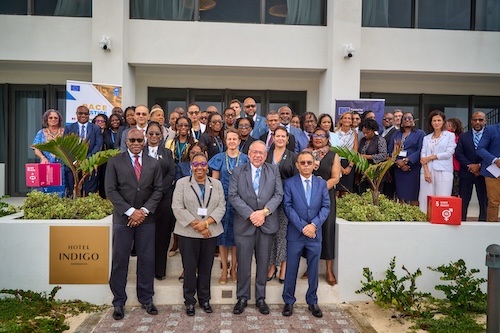
Caribbean justice systems are facing mounting pressure from rising crime, growing caseloads and limited resources, making urgent reform essential, Chief Justice Leslie Haynes has warned.
Addressing the opening of a regional workshop on case management standard operating procedures (SOPs) for the judiciary at Hotel Indigo on Thursday, Haynes said a major obstacle to reform is the absence of reliable judicial data to guide decision-making and improve court efficiency.
“We do not have a framework for the collection of data,” he said, noting that responsibility for gathering information has often fallen informally to legal assistants, judicial support officers and clerks.
“There is a necessity for us to create a framework for the collection of this data because if we do not, we will be unable to make the necessary decisions that we ought to make, and our decisions will be based on anecdotal evidence,” Haynes added.
He stressed that data should not be viewed as a tool for assigning blame but rather as a way to identify inefficiencies and improve operations.
“We need data to understand where the bottlenecks exist, and having gathered the data, to resolve the issue,” he said.
The Chief Justice also cautioned that technology alone would not fix the judiciary’s challenges.
“Culture eats technology for breakfast,” he said. “Change management is a mindset and it has to be addressed by us.”
Haynes said the workshop comes at a critical time as criminal justice systems across the region face mounting pressures.
“Our criminal justice system is under tremendous pressure,” he said, warning that rising crime, complex social issues and heightened public expectations have created an urgent need for reform throughout the Caribbean justice sector.