


Government
Caribbean Urged to Break Down Barriers in Fight Against Crime

Caribbean countries are being urged to abandon a culture of secrecy and strengthen intelligence sharing as regional leaders intensify efforts to combat transnational crime.
Attorney General Wilfred Abrahams made the call during a regional legal forum in Barbados focused on Joint Investigation Teams (JITs), an initiative aimed at improving collaboration among law enforcement agencies across borders.
Abrahams said the region cannot effectively tackle modern criminal networks while operating in isolation, warning that criminals are already functioning as multinational enterprises.
“Crime at the end of the day is a business. Criminals are businessmen in the business of crime,” he said, noting that dismantling those operations requires targeting their financial gains.
Barbados, he revealed, is in the process of establishing an Asset Recovery Unit designed to strip criminals of the profits generated from illegal activities. He described this as a critical step in weakening organized crime.
However, the Attorney General identified poor information sharing as one of the region’s greatest challenges, pointing out that mistrust exists not only between countries, but also within governments and even among departments.
“Sometimes one department in government will not even share with another related department,” he said, adding that such practices undermine investigations and delay critical responses.
Abrahams also highlighted real cases where individuals under investigation in one country were able to travel freely across the region, committing offences undetected due to gaps in intelligence sharing.
“If threat actors are on your radar, they need to be on our radar too,” he stressed.
Executive Director of the Regional Security System, Rear Admiral Errington Shurland, echoed those concerns, warning that the Caribbean is facing an increasingly complex and interconnected criminal landscape.
He pointed to rising gun seizures, gang activity and growing links to international criminal networks, noting that regional investigations are now attracting attention from law enforcement agencies in Europe, Latin America and Asia.
“In 2025 alone, requests for information were received on cases valued at over 100 million euros,” Shurland said.
He added that while crime has become more transnational, existing systems remain constrained by bureaucracy, legal differences and language barriers.
Both officials identified Joint Investigation Teams as a practical solution, allowing countries to share intelligence in real time, coordinate operations and pool resources.
Shurland said such teams would “facilitate effective information sharing” and help dismantle the silos that have historically limited regional cooperation.
Abrahams, meanwhile, insisted that the issue is no longer whether countries should collaborate, but how quickly they can implement the necessary systems.
“The only option is for us to get to the point of complete sharing of information where it makes sense,” he said.
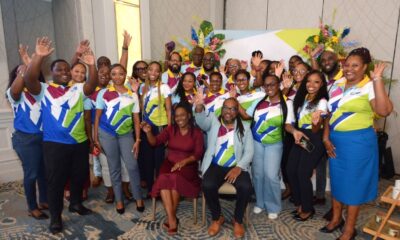
The two-day forum, hosted in Barbados, brings together Attorneys General, security officials and legal experts from across the Caribbean to examine frameworks for improving cross-border investigations and asset recovery.
Both speakers agreed that without stronger cooperation, the region risks falling further behind criminal networks that already operate without borders.